Category: Engagement Rings

  • Royal Family Jewelry Styles for “The Crown” Obsessed

    Royal Family Jewelry Styles for “The Crown” Obsessed

    Have you been nonstop watching The Crown on Netflix? Because that’s exactly what we’ve been doing this second round of lockdown! We can’t help but notice all the royal jewels sparkling throughout the episodes. Can you blame us?!

    From the opening scene, The Crown breaks down the Queen’s infamous coronation crown, a true royal heirloom. The Imperial State Crown has been around since the 15th century in various styles, but today’s most recent version was created in 1937. As you watch the opening sequence, the crown begins to fashion right before your eyes with over 2,800 precious gems. The most memorable gems encrusted in this crown are the Black Prince’s Ruby, the Cullinan II Diamond, St. Edward’s Sapphire, and the Stuart Sapphire.

    The Royal family jewels are passed down through generations or borrowed from the Queen’s personal collection. Though her collection has not been appraised and deemed priceless, it’s said to be worth $4 billion! We’ve all seen the sparkling tiaras and crowns from royal event, but let’s dig a little deeper into the royal family’s personal styles with comparisons to Bahdos’ exclusive collection of brilliant diamond and precious gemstone luxurious pieces, perfectly fit for a Queen… or Princess.

    Queen Elizabeth II

    The show starts out at the beginning of the Queen’s reign. Through the episodes we watch her grow into her role as the Queen of England, as well as her sense of fashion. The Queen’s go-to jewels are the classic strands of pearls complemented with a pair of pearl and diamond studs.

    Classic Freshwater Pearl Necklace

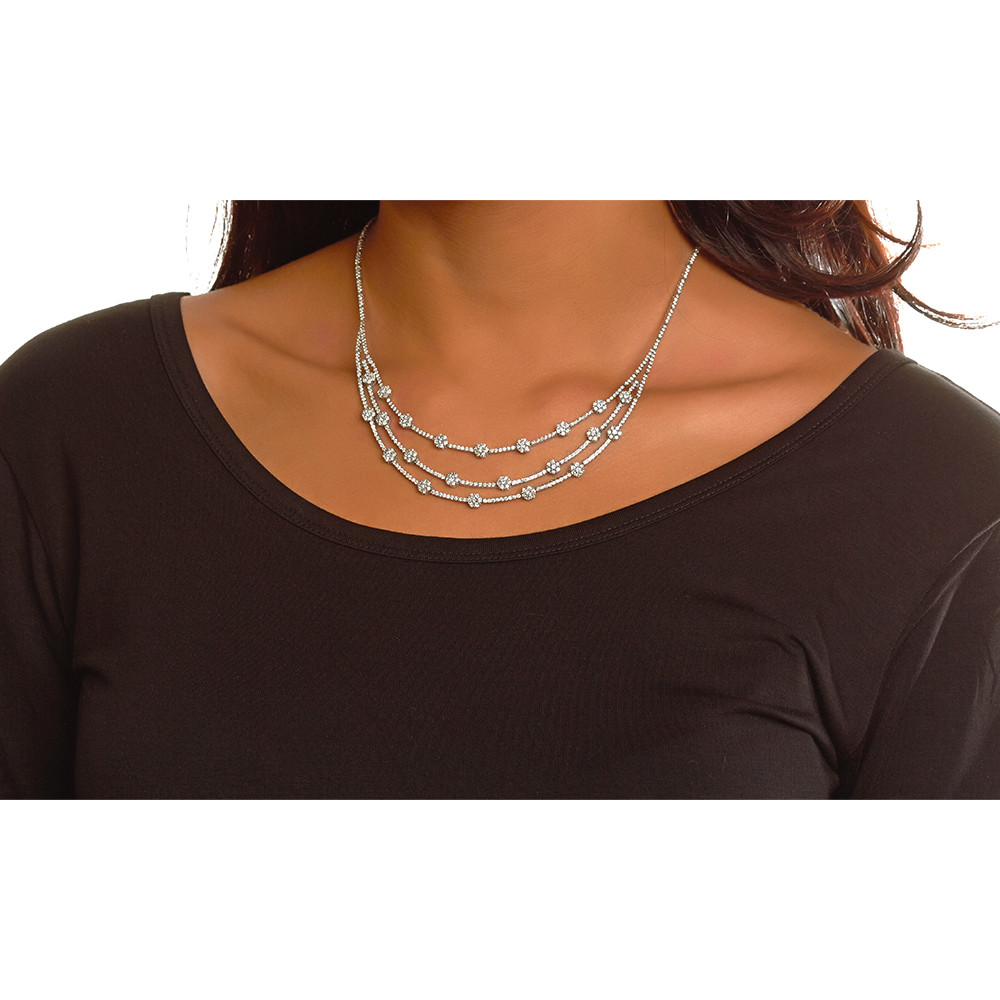
    She loves to layer her pearls in rows of three as well as her diamonds! A favorite extravagant necklace of the Queen’s is the Festoon Necklace, which was gifted by King George VI. This necklace is made of three layers of sparkling diamonds.


    Three Strand Diamond Necklace

    You can even say the Queen’s been on trend for decades with her love for stacking her jewels!

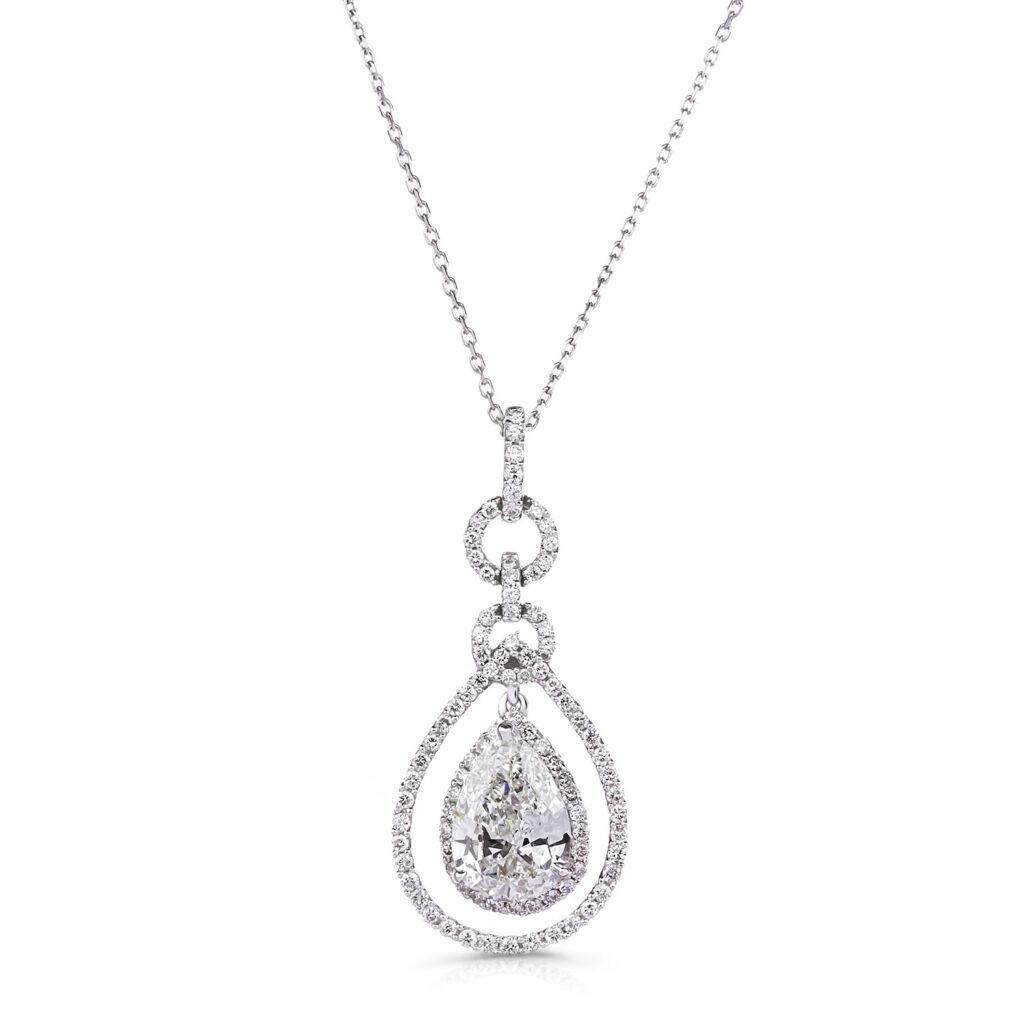
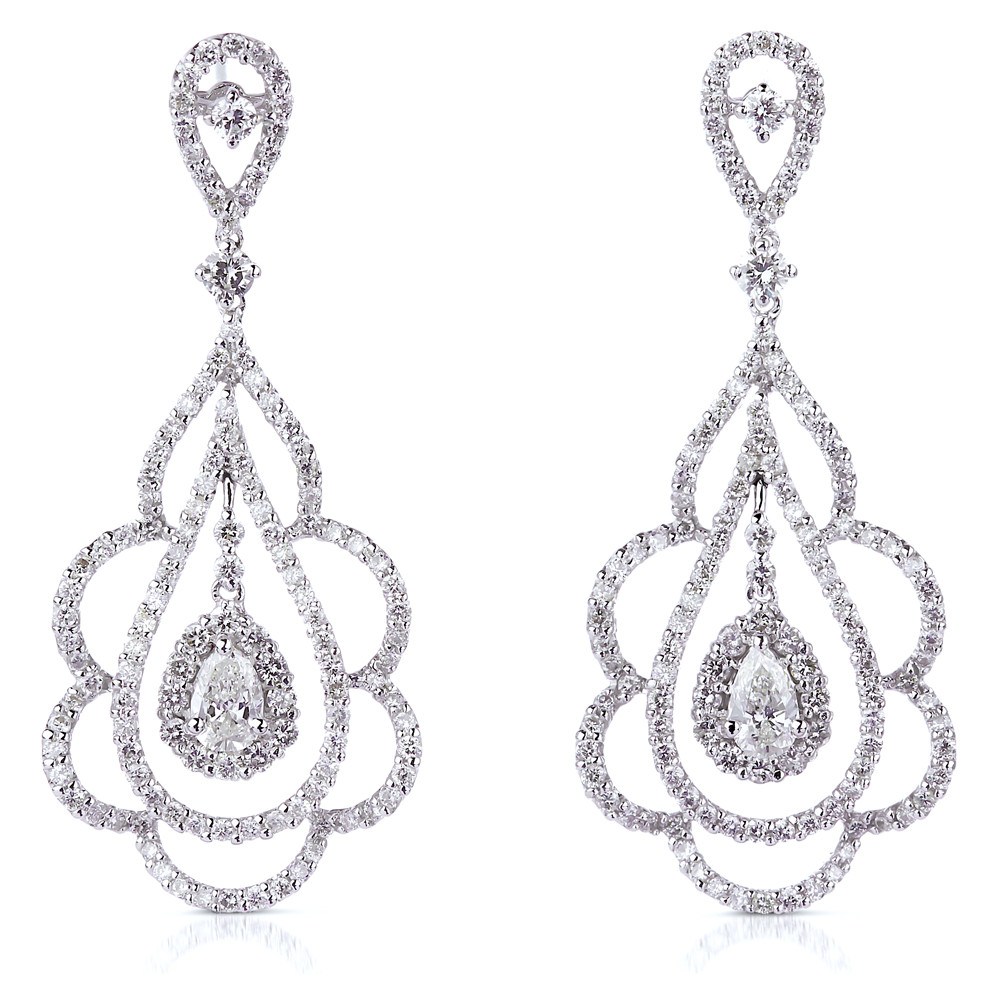
    One characteristic that is notable with the Queen’s jewelry is that they are all typically worn as a set. From sapphires, rubies and emerald sets, to all the most intricate diamond designs, the Queen has it all. Her most popular diamond set may have to be her pear cut diamond drop earrings and pear cut diamond necklace.

    Pear Cut Diamond Halo Pendant
    Pear Cut Diamond Dangly Halo Earrings

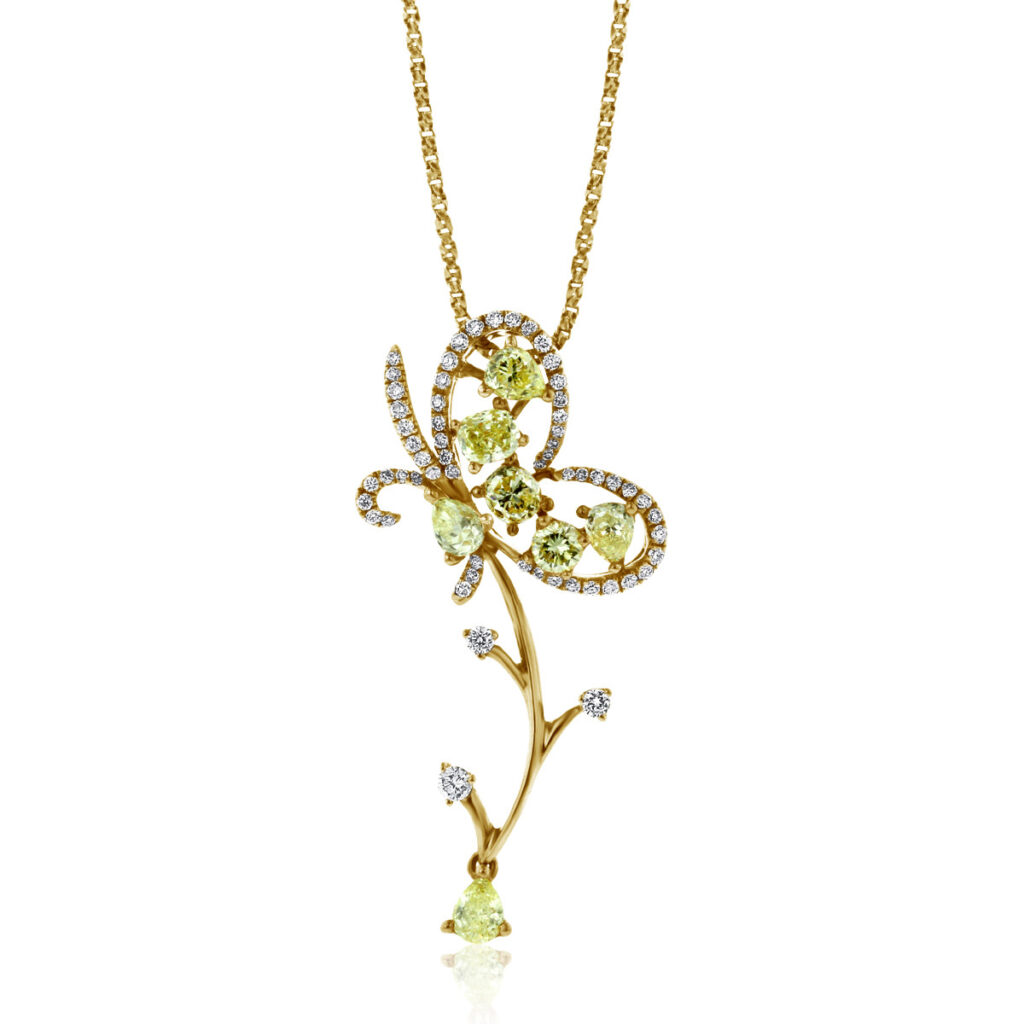
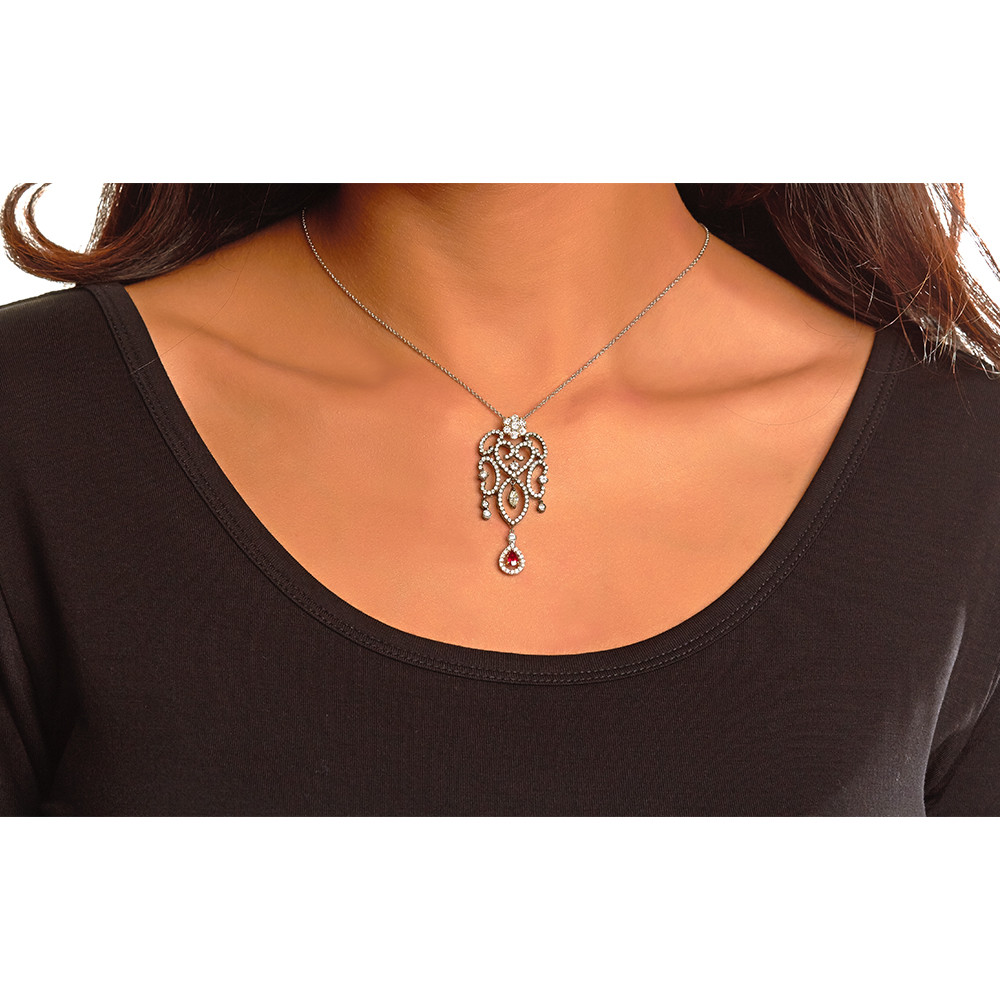
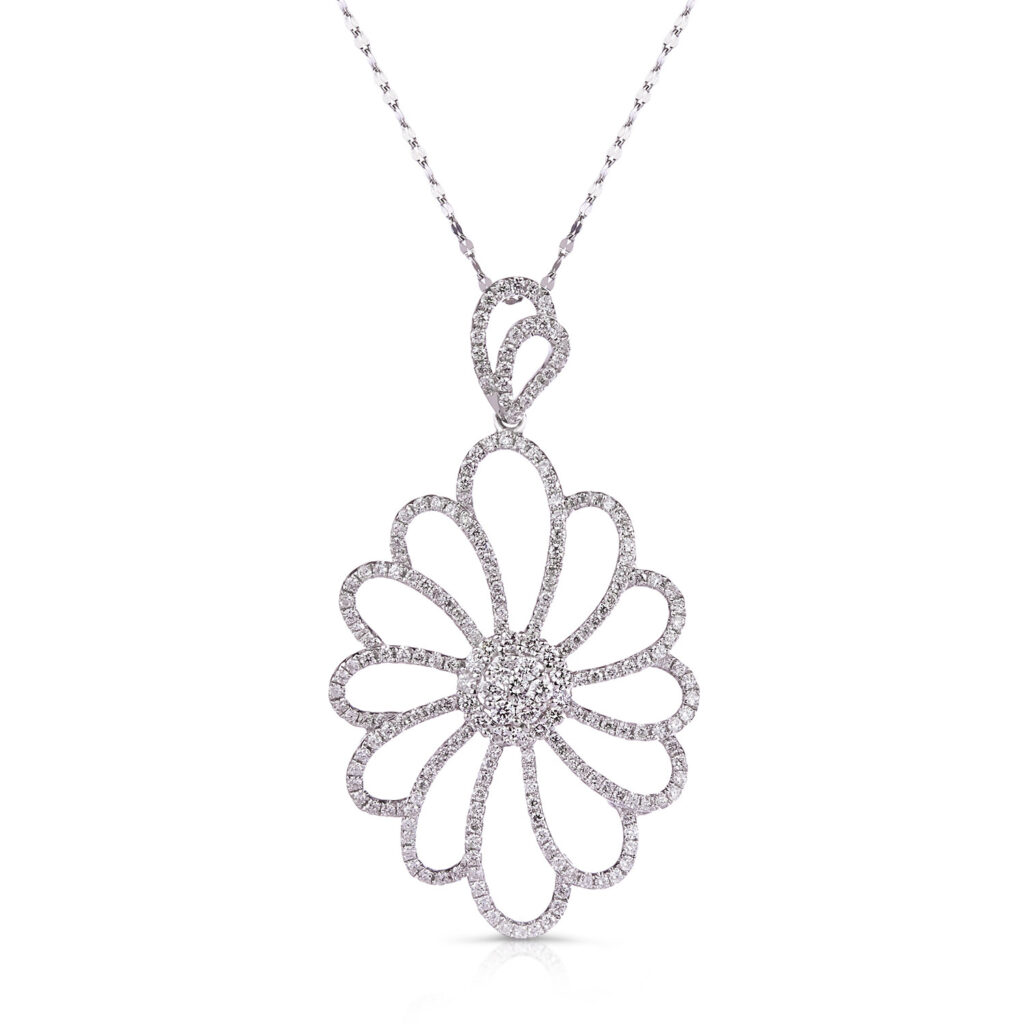
    Besides her regular jewels (who are we kidding… they’re not regular!), Queen Elizabeth is also known for having unique and colorful brooches! Here are a few pendants inspired by the Queen’s diamond pins:

    Yellow Diamond Flower and Butterfly Pendant
    Antique-Style Diamond and Ruby Pendant
    Diamond Flower Pendant

    Princess Margaret

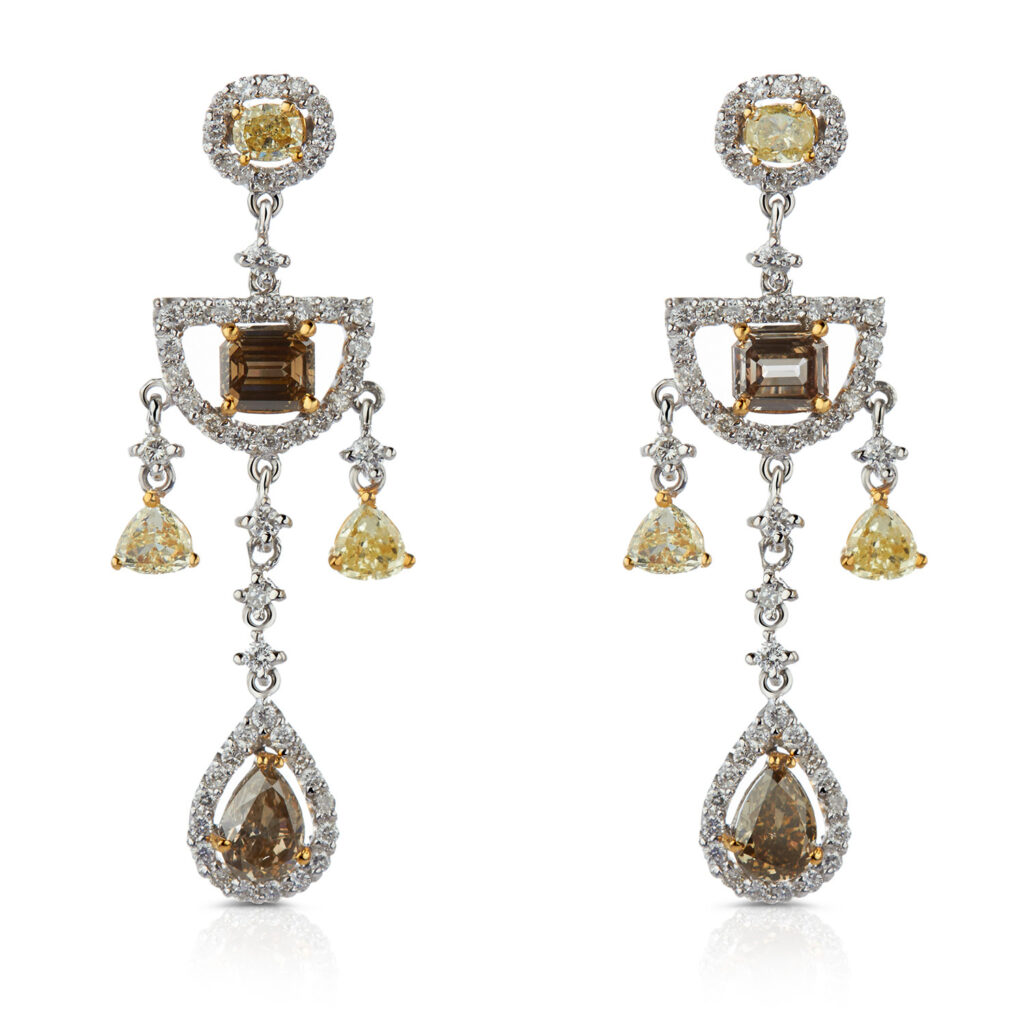
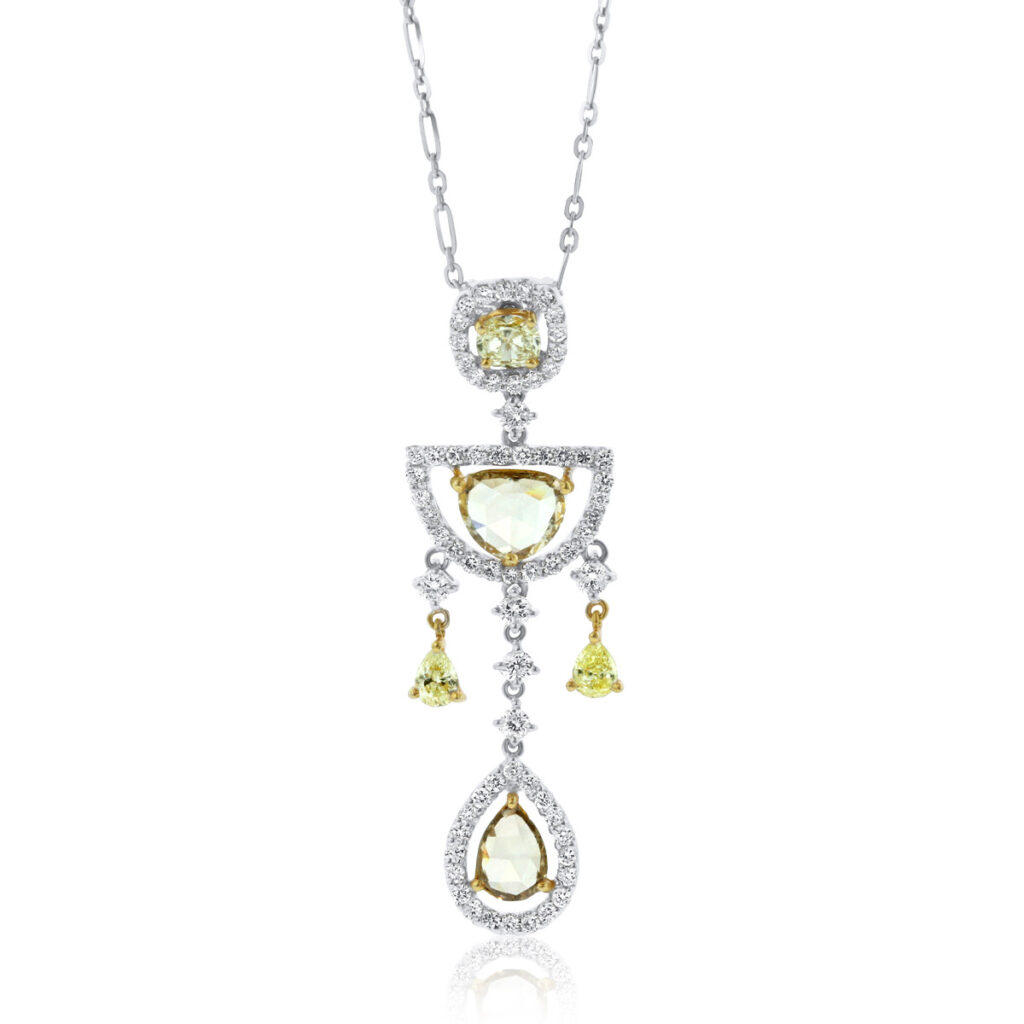
    Princess Margaret was known as the “party princess”, clearly not one to shy away from expressing herself through her jewels. Princess Margaret liked very colorful gemstones and diamond in a chandelier style setting. Her style was very similar to:

    Multicolored Diamond Chandelier Earrings
    Multicolored Diamond Chandelier Pendant

    A favorite piece of Princess Margaret’s was Queen Mary’s Diamond Riviere, which is a gorgeous diamond tennis necklace she often adorned around her neck. If you’re feeling like a party princess, the classic diamond tennis necklace is definitely for you!

    Graduated Diamond Tennis Necklace

    Another popular necklace worn by the Princess was the Teck Diamond Hoop Necklace. This was a much more exquisite and detailed piece of diamonds surrounded by halos of diamonds all the way around.

    Multicolored Fancy Diamond Hoop Necklace

    Princess Anne

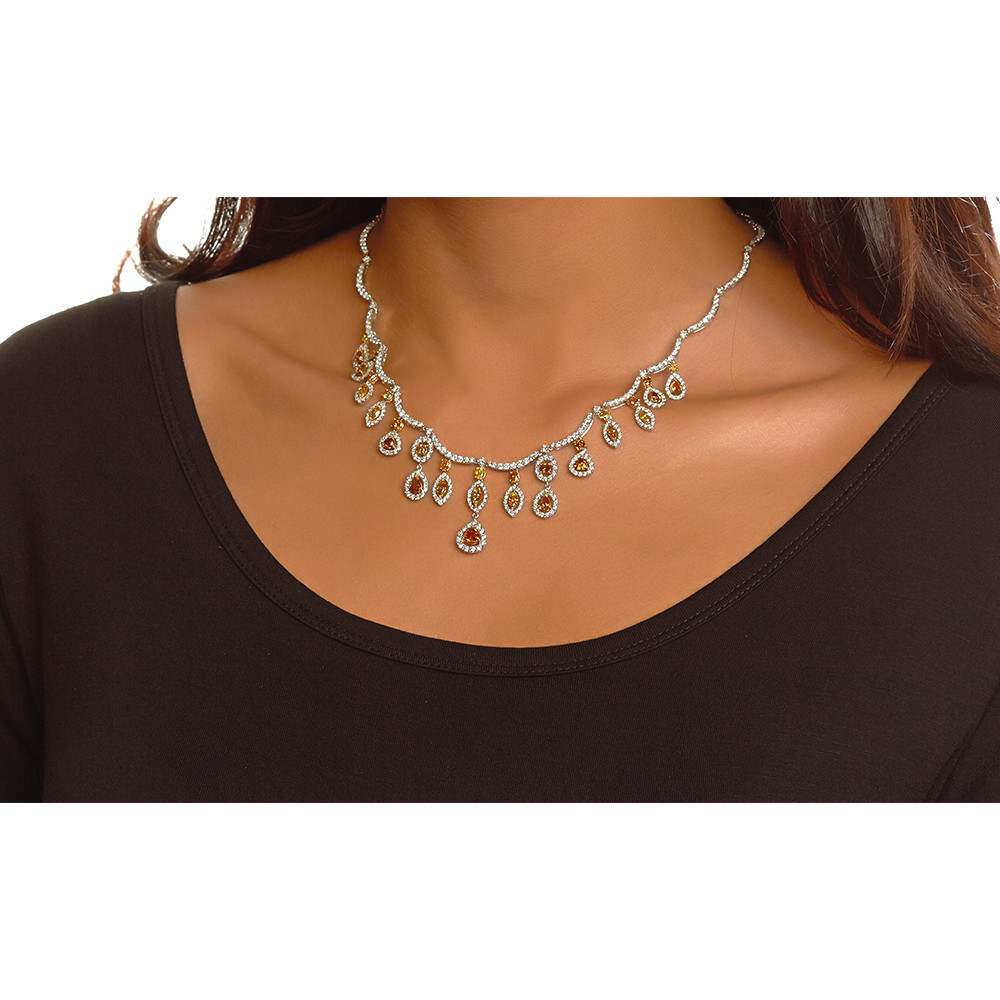
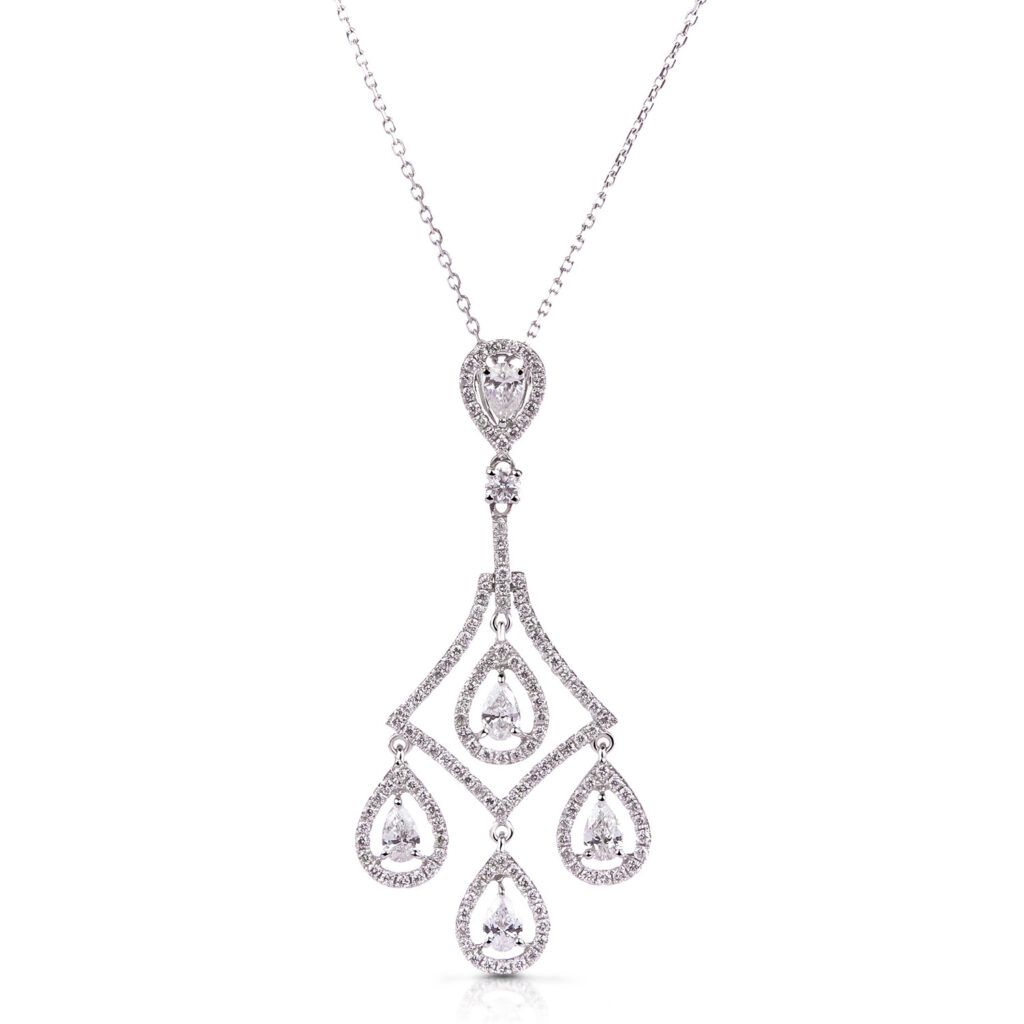
    Princess Anne may seem like a more athleisure-styled princess in today’s world, but she definitely hasn’t shied away from the glam life. When Princess Anne isn’t horseback riding, you can catch her in a colorful dress styled with a dazzling chandelier necklace.

    Multicolored Diamond Chandelier Necklace
    Teardrop Diamond Chandelier Pendant

    Princess Diana

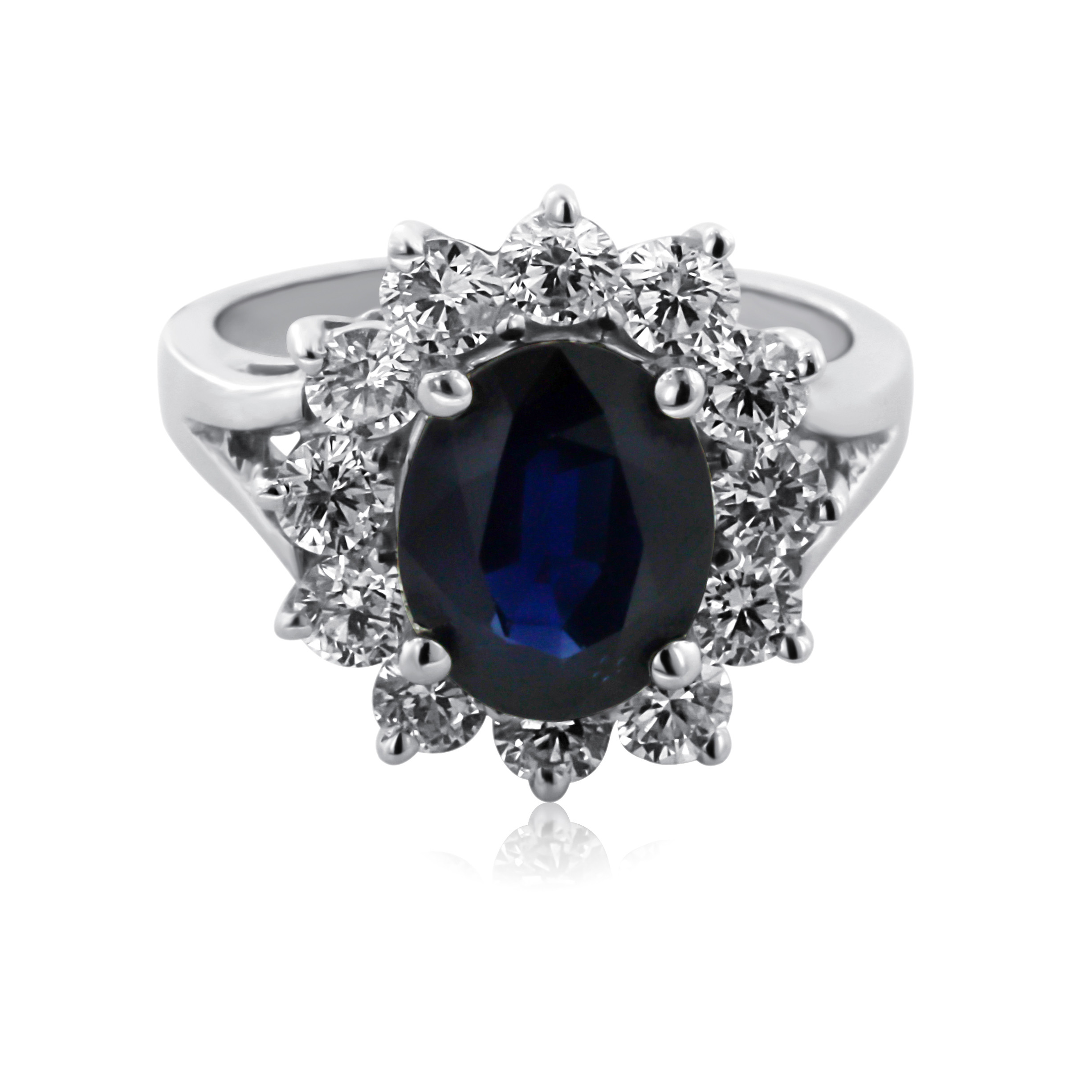
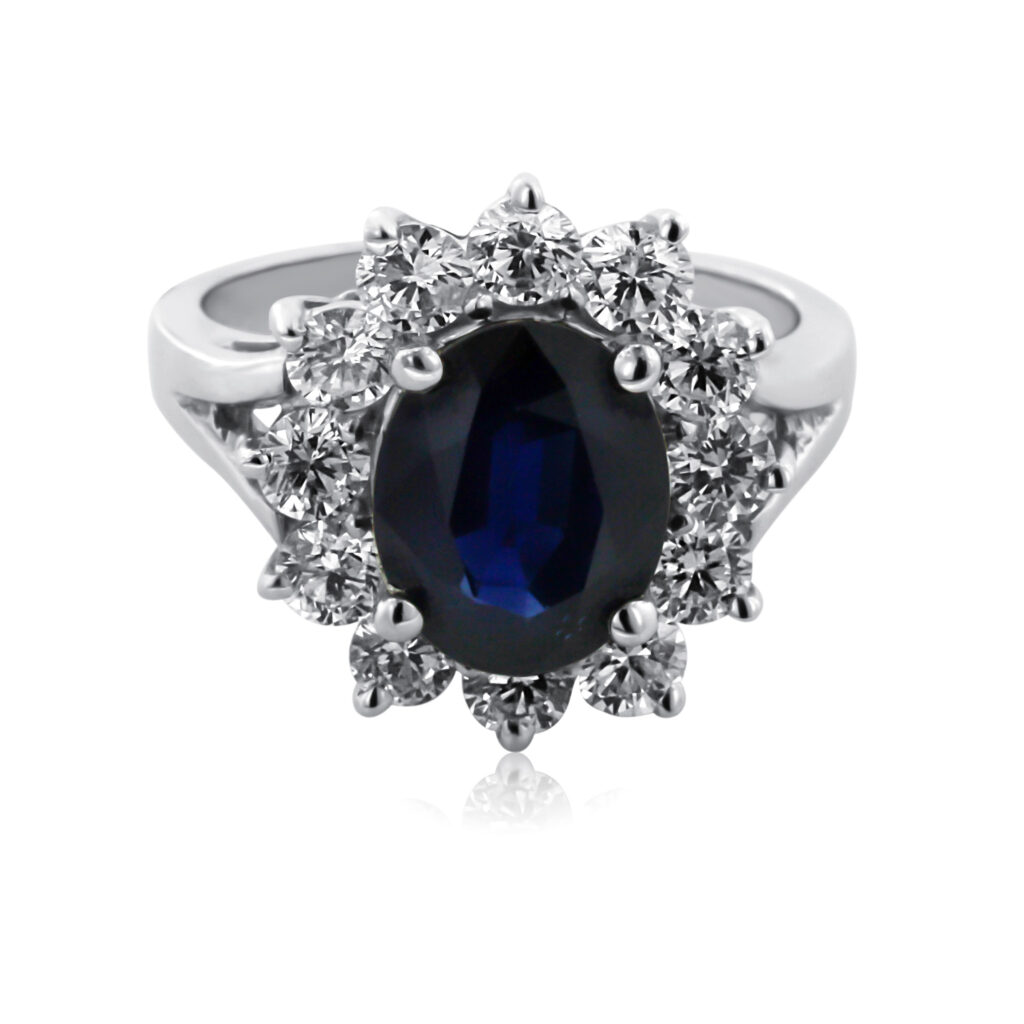
    When you think of Princess Diana, the first jewel that comes to mind is her breathtaking blue sapphire and diamond halo engagement ring. 

    Oval Blue Sapphire and Diamond Halo Ring

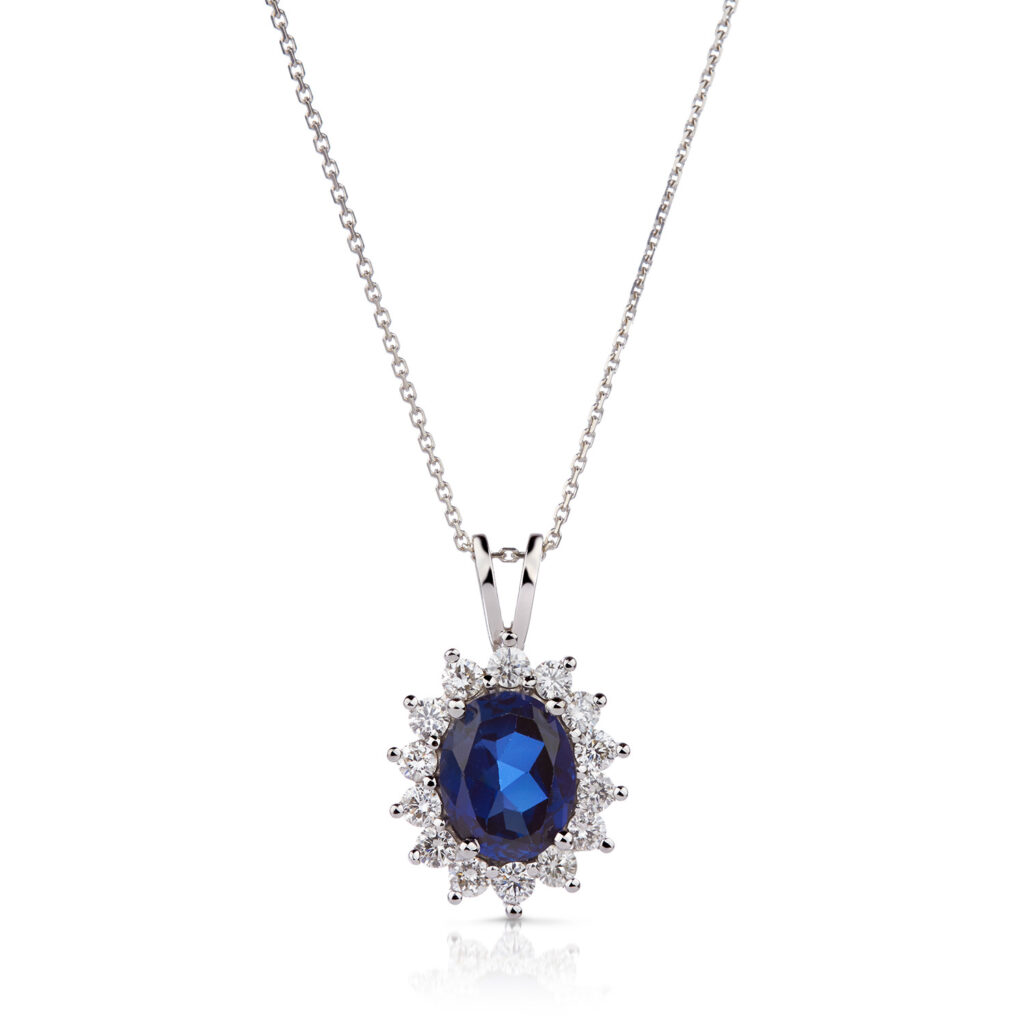
    Oval Blue Sapphire and Diamond Halo Pendant

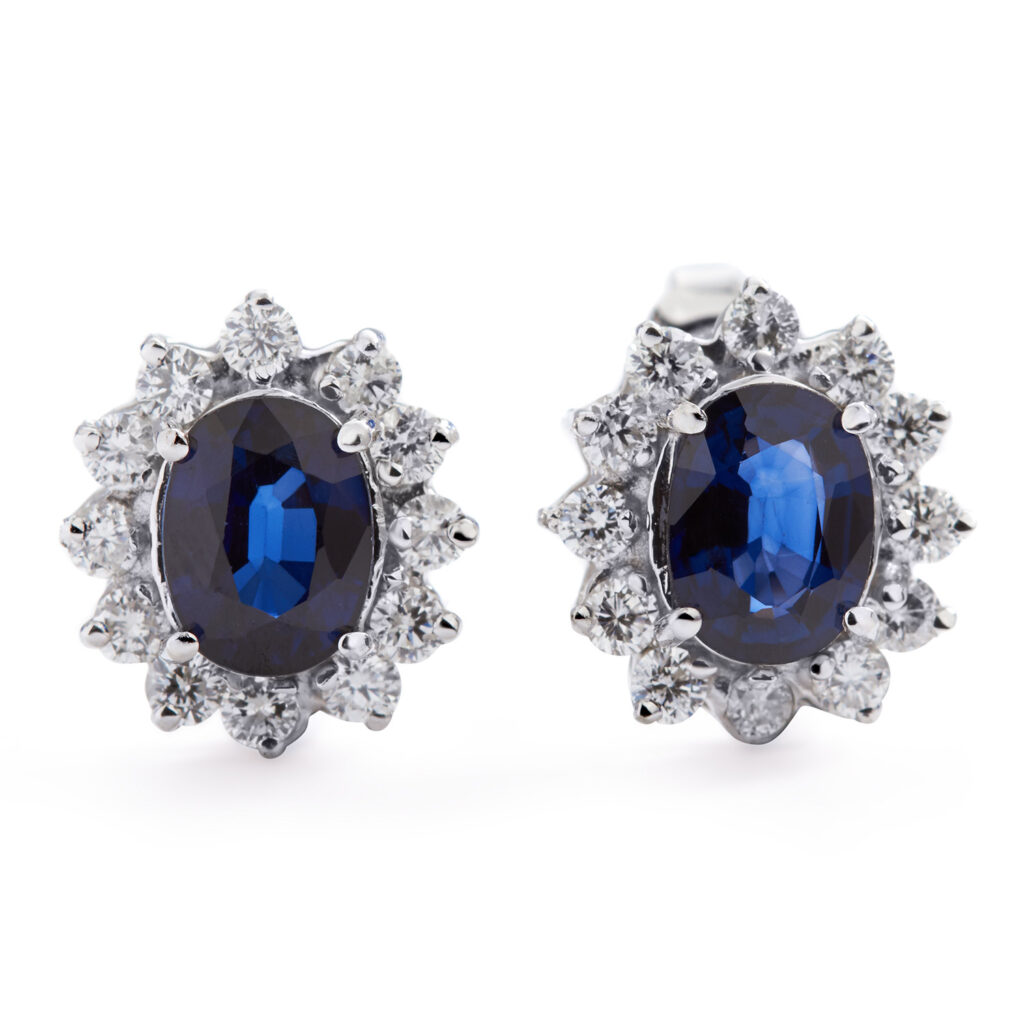
    Oval Blue Sapphire and Diamond Halo Studs

    As we mentioned before, the royal jewels are borrowed or passed down through the families. Princess Diana’s engagement ring was given to Kate Middleton by Prince William in 2010. Prince Harry proposed to Meghan Markle with a customized ring using his mother’s diamonds and Meghan was gifted Diana’s memorable Asprey Aquamarine Ring, also known as the Freedom Ring, which she styled with her wedding reception dress in 2018.

    It’s truly amazing to see how the jewels are still worn today after years, even centuries, of passing them down. Whether a necklace is worn as a headband or a brooch as a pendant, the royal family knows how to restyle their traditional jewels and keep up with the fashion trends through the years. With their show-stopping jewels, the royals really hold true to the motto: diamonds are a girl’s best friend!

    …and none for Camilla Parker-Bowles. Bye.

  • Resetting vs. Upgrading Your Engagement Ring: Desi Perkins Edition

    Resetting vs. Upgrading Your Engagement Ring: Desi Perkins Edition

    Let’s start off with everyone’s first question: Who is Desi Perkins? Desi Perkins is a former freelance makeup artist, turned YouTube guru and, most recently, a business entrepreneur of her own sunglasses brand.

    With 4.3 million Instagram followers and 3.33 million YouTube subscribers, Desi gives us the ins and outs of her beauty tips and secrets! Her most popular youtube video has 17 million views being the “Eyebrow Tutorial”, with KKW Beauty tutorial featuring Kim Kardashian West coming in second at 9.3 million views.

    True Desi Perkins fans have watched her fertility journey on her family channel, The Perkins, featuring her husband, Steven Perkins, which has 636,000 subscribers. As if Desi’ journey wasn’t awe-inspiring alone, this girl boss launched her own sunglasses brand, Dezi, in July 2020 (mid-pandemic and pregnant!) with a restock selling out TWICE. Desi gave birth on October 20, 2020 and introduced her insta-fam to the newest addition to “Perkins Produce”, Ocean Perkins. Desi is truly an inspiration to all females around the world.

    Is there anything this beauty can’t do?!

    The Original Engagement Ring

    Steven proposed to Desi in Tokyo, Japan back in 2010.

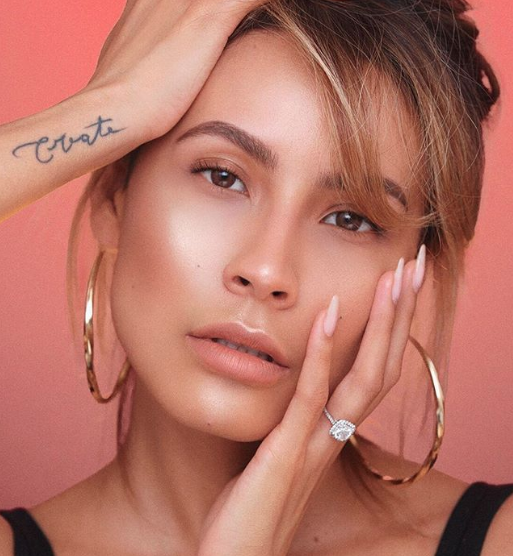
    Their love story is nothing short of an adventure. One thing that caught our eye was her engagement ring. As a true follower, Desi gave us a close up of her engagement ring back in 2013. (Saved you a lot of scrolling, you’re welcome!)

    Desi’s original engagement ring is a 2-3 carat cushion cut diamond center with a cushion shaped diamond halo, wrapped around her finger with a split-shank diamond band. Still a very popular cut and look today, Desi seems to have had another idea in mind…

    The New Engagement Ring

    When Desi posted a youtube video titled “Bridal Makeup Tutorial” in 2017, we noticed something was different… Desi’s new engagement ring! AND WE LOVE IT!

    The remaining question is, did Desi reset her original diamond or did she upgrade her engagement ring? In Desi’s case, she got an upgrade! Her new ring is a 5-6 carat cushion cut diamond center with a modern, more sleek version of her original cushion halo setting. Her new setting features a petite diamond halo and thin diamond band, rather than the split-shank diamond band look.

    Resetting vs. Upgrading

    What’s the difference between resetting or upgrading your engagement ring? Let us help you!

    When a bride decides to reset her engagement ring, this means taking the original center diamond and giving it a new home in a brand new setting. This usually happens if a ring was passed down from a previous family member or the bride’s style changed and she’s looking for a new look!

    On the other hand, upgrading your ring is changing everything! Typically, a bride upgrades her center diamond to a higher carat weight but keeps the same diamond shape. Then, sets the new diamond into a new setting- changing the whole look! An upgrade is traditionally gifted as an anniversary present!

    Which Setting to Choose?

    Ultimately, the decision is yours. Whether you’re a fan of the split band look or into the more simple petite diamond band- both are gorgeous. At Bahdos, we offer a build-your-own engagement ring feature that helps guide you to creating your dream ring! If you’re in love with either of Desi’s engagement rings, you can find similar setting styles below:

    Cushion Cut Diamond Halo and Split Shank Band Setting
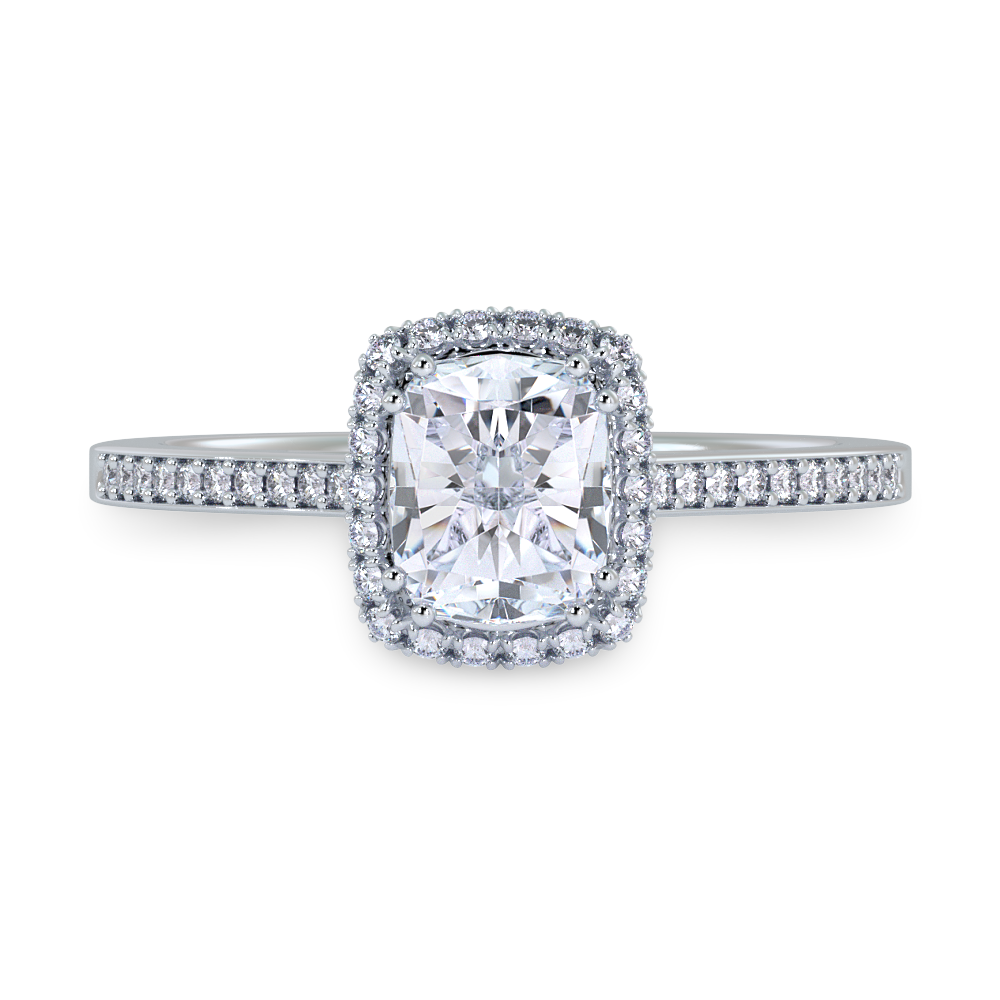
    Cushion Cut Diamond Petite Halo and Thin Diamond Band Setting

    You can always consult with our engagement ring specialists via chat, email or phone to help reset or upgrade your engagement ring that best exemplifies YOU!

  • How to Tell if a Diamond is Real

    Have you ever spotted a giant rock on someone’s left-hand ring finger and wondered if it was real? Well, if it’s a good fake, you may never be able to tell – unless you get up close and personal. There are a few ways you can tell if a diamond is real, but you need access to the stone. You’ll have to get the diamond in your hands to be able to perform any of these tests, but they should be able to help you tell if a diamond is real.

    So these tips aren’t the best for checking up on someone else (unless you’re a super sleuth), but they are great for evaluating a stone you bought second-hand or through an antique dealer. And they may work to help you ensure that your diamond matches its certificate.

    Here are a few ways you can tell if a diamond is real.

    The Fog Test

    Here’s a quick and easy way to tell if the diamond you’re looking at is a fake. Fog it up with your breath. If it stays fogged up for 3 seconds or more, it’s likely a fake. Real diamonds clear up quickly because they disperse heat instantly. This makes it almost impossible for them to fog up.

    So, going back to that massive rock – If you can tell from across the room that it’s fogged, it’s definitely not a diamond.

    The Scratch Test

    You may have heard of this one before. It’s popular because diamonds are well-known for being among the hardest substances on earth. They can even cut through glass. Yup, those spy movies were right.

    If you can scratch a plate of glass with your diamond, you can bet it’s real. But don’t rush out to get a piece of glass just yet. Although this is a good way to know whether your diamond is real, you can very easily damage the diamond by scratching it along glass.

    The Transparency Test

    Grab an old piece of newspaper and place your loose diamond face down with the pavilion facing up on a word. If you can read that word through the newspaper, your diamond probably isn’t real. This trick only really works with larger diamonds of 1-carat or higher. And you’ll also want to make sure you’re starting with a clean stone.

    The Fire Test

    Have you ever poured hot liquid into a cold glass? It shattered, didn’t it? Well, the same thing happens to most fake diamonds. This method puts stones to the hot-cold test. Use a lighter to heat up the diamond for about 30 seconds, being careful not to burn your fingers. Then, drop it into a glass of cold water. If the stone shatters, it’s not a diamond. Don’t perform this test unless you’re willing to put a lesser stone up for sacrifice.

    The Float Test

    This one won’t give you a conclusive answer in every case, but if your stone floats in water, it’s definitely not a diamond. Diamonds are extremely dense gemstones, which is part of the reason why their hardness rating is so high. But a diamond wouldn’t sink. With that said, some fake diamonds will also sink, so this test doesn’t exactly hold water in every case.

    Use a Diamond Scale (advanced)

    For this one, you may need to enlist the help of a jeweler (who should be able to tell if it’s a diamond right away). But if you happen to have a scale and a real diamond of the same size lying around, you can tell if your diamond is real. You can tell if a diamond is real because it will weigh less than a cubic zirconia of the same size. In fact, cubic zirconia weighs about 55 percent more than a diamond.

    Also, if you want to check to see whether the diamond in your hand is really the one from your grading report, measuring weight is a great test. If the diamond’s actual weight matches the certificate, it’s legit.

    Black Light Test

    Some diamonds have what we call fluorescence. This means that it shows a fluorescent blue color under a black light. This accounts for only about 1/3 of all diamonds on the market. But if your stone is showing fluorescence, you can bet it’s a diamond.

    On the flip side, the absence of fluorescence doesn’t mean it’s a fake. So this test is only really helpful for about one-third of all diamonds.

    If you really want to tell if a diamond is real, the best thing you can do is take it to your local jeweler. He or she will be able to tell right away, and may even be able to give you an idea of your diamond’s value.

    At Bahdos, we offer GIA certified diamonds and appraisals on select pieces to ensure trust with our clients and guaranteed quality of our diamonds.

  • What You Need to Know About Valeria Lipovetsky’s Bridal Set

    What You Need to Know About Valeria Lipovetsky’s Bridal Set

    Have you ever set eyes on a bridal set that you just can’t stop thinking about? That’s the precise reaction so many people are having with Valeria Lipovetsky’s engagement ring and wedding ring combo. 

    It’s a classy statement-making set that anyone would be proud to display on their ring finger. 

    And it’s so, so Valeria. 

    Who is Valeria Lipovetsky?

    Former model, fashion icon, social media influencer. Is there anything Valeria Lipovetsky can’t do? 

    You may know her from Instagram or YouTube, but Valeria has been in the fashion industry since the tender age of 15. She’s traveled and lived in cities like Tokyo, New Ork, Paris and Barcelona. She’s modeled for some of the biggest names in the industry. And now, the world is falling in love with Valeria Lipovetsky. 

    Through her Instagram and YouTube channels, Valeria shares her beautiful, crazy life along with style and makeup tips. But what helps set her channels apart is that she is unapologetically herself. With a quirky sense of humor, this mom doesn’t seem to take life too seriously. And we couldn’t love her more for it. 

    About Valeria’s Wedding

    Valeria married businessman Gary Lipovetsky on July 1, 2012. They have three sons, Benjamin, Jake and Maximus.

    Valeria and Gary met when she was a 19-year old living in New York. In a Beyond Fashion interview, she was candid about Gary’s initial persistence and how that helped their friendship blossom into a relationship. By this time, she was 20 and he was 38, so there was a big age gap, but she saw something in Gary. Here’s what she had to say about their meeting:

    “… I thought to myself, ‘if I had kids, would I want my kids to be like him?’ and the answer was 100% yes. You basically find yourself a great partner. And that’s what it is, a partnership. Love is great, but love has its ups and downs, especially with kids and marriage. With Gary, I just found values in him that I knew I’d want in a person that would be with me.”

    Thanks to Youtube, Valeria shared on her 6th anniversary her wedding highlight video, which was absolutely nothing short of a Dream Wedding. And if that wasn’t enough, Valeria took us behind the scenes of her mother’s wedding, which she so wittingly has dubbed “My (Mother’s) Big Fat Russian Wedding.

    Here’s a quote Valeria shared on Facebook on her mother’s big day: 

    “Getting wedding ready with the boys was one hell of a ride. I had to tell them little stories how they need to wear their pants because mama is wearing a crown so there’s standards. Then getting them in the car while balancing that crown was fun. They were supposed to carry the rings but Jake had a meltdown last minute. Benjamin wanted me to hold him during the ceremony so he could ask “mama what is that mean” after every word but at least they looked so damn cute in those tuxes.”

    About Valeria Lipovetsky’s Wedding Set

    There’s a lot to love about Valeria Lipovetsky’s bridal set. There’s the simplicity of the 6-prong solitaire engagement ring setting with a 6+ carat diamond. And then, there’s the elegance of the band with 5 prong-set round brilliant diamonds, 0.50-0.75 carat each. Although they create a classic look, the two pair together to create an appeal that’s nothing short of showstopping. 

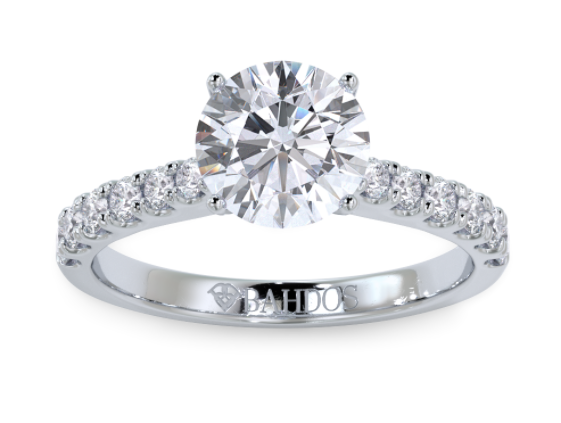
    If you’re in awe of Valeria Lipovetsky’s wedding set, know that you can achieve this breathtaking look with Bahdos. Use our build your own engagement ring tool by selecting a round cut diamond center, set into our classic 6-prong solitaire engagement ring. Pair it with our diamond prong-set eternity band, customize to a partial or 5-diamond band.

  • How to Make a Ring Smaller

    Brian Schneider for Pexels

    Everyone knows that you can go to a jeweler to have your ring resized. But that’s not always a viable option. Some people want a temporary option while others are looking for something cost effective. It may be a stop-gap solution, but there are a few DIY ways you can make a ring smaller.

    If you’re on the fence, first let’s cover a few situations where you won’t want a permanent resizing solution.

    When Not to Resize Your Ring

    Everyone faces a moment when they wonder whether they should get their ring resized. Maybe you’re swimming in the pool and feel like your ring is going to slide right off your finger. Or maybe you’re sitting in your chilly office spinning your ring around your finger when you notice how much space there is.

    Interestingly enough, it’s not the ring that changes. It’s your finger. Your finger may swell or shrink due to weather or weight loss.

    It’s to be expected for a ring to become snug during pregnancy. This isn’t a time to have it resized. It will pass. The same holds true for a snug fit after an especially salty meal.

    Some people are very sensitive to temperature fluctuations, and may notice that their rings get very loose in cold weather and snug in warmer weather. But as long as your ring fits well most of the time, all you need is temporary ring adjuster.

    How a Jeweler Can Make a Ring Smaller (Without Resizing)

    Oftentimes, the best solution for an engagement ring is the professional one. It’s best to have the jeweler help you come up with an appropriate solution, if possible.

    Here are a few ways the jeweler can help make a ring smaller without resizing:

    • Sizing beads – These are tiny metal beads that your jeweler can add to the inside back of your ring to help make it smaller. These are the perfect solution for people whose rings are one-half size too large. If this is the case for you, sizing beads will help keep that ring upright on your finger.
    • Spring insert – The spring insert is a horseshoe-shaped insert that goes on the inside of your ring to make it temporarily smaller. It actually offers a better fit than even a well-sized ring because it springs open to fit around your knuckle, and then it springs back into place. This creates the snuggest possible fit around your finger. This will be a bit more expensive than sizing beads, but it’s still cheaper than resizing.
    • Sizing bar – This is a u-shaped bar that goes across the bottom of your ring. It latches closed when the ring is in place. Think of it as a way to cinch your ring to the appropriate size. This solution works well for anyone who has to take a ring down by a few sizes.

    DIY Ways to Make a Ring Smaller

    If you want to DIY without a visit to the jeweler, you can buy a plastic guard to secure your ring in place. This is like a little silicon sleeve that helps your ring fit more snugly.

    You may find other DIY options on the web, like tape or liquid guard, but we recommend steering clear of these. If your ring is alloyed with anything other than gold or platinum, it may react to the adhesive and cause some problems. Since we’re looking for a quick and inexpensive fix here, we don’t want to risk ruining the ring or creating a need for expensive repairs.

    If your ring is fitting a bit too loosely these days, take the steps outlined in this post to fix it fast. If it continues, you may want to consider having your ring resized.

    At Bahdos, we offer one free ring resizing with your purchase to make sure the ring you’ve selected fits perfectly to you. If you ever have any additional questions about sizing or your ring from Bahdos.com please don’t hesitate to chat with us!

  • Which of the 4Cs is Most Important?

    You spend your entire school career learning about things like algebra and art history, and you think you know enough to get by. And then you’re faced with buying a diamond engagement ring and you feel like you need to go back to school. What gives?

    Whether it’s a 2-carat engagement ring or a 0.20 carat diamond stud, most people will buy at least one diamond in their lifetime. So why does it feel like you need a specialized degree to successfully buy a diamond? Diamond buying shouldn’t be so complicated.

    In truth, it doesn’t have to be complicated. With a small amount of the right knowledge, you can confidently buy the best diamond for your budget.

    Did you know that not all of the 4Cs carry the same weight? You’ve heard about the 4Cs of diamond buying, right? Okay, let’s start there.

    What Are the 4Cs of Diamond Buying?

    You may already know a bit about the 4Cs, so we’ll keep this section brief. Here’s a basic overview:

    • Cut – a diamond’s cut is more about the facets and light distribution than it is about shape. In fact, when we talk about diamond cut, we’re not talking about shape at all.
    • Color – Since a diamond is a natural stone, it comes in many variations. Diamonds do come in designer colors (like pink, yellow and black), but the 4Cs refer to the color found within white diamonds. White diamonds can range from completely colorless to having a warm yellow/brown hue. Colorless diamonds are most valuable, but some of your choice here may be subjective.
    • Carat – Some people mistakenly think that carat refers to a diamond’s visible size, but that’s not quite true. Carat is a measure of weight alone, and a diamond’s cut and shape can impact the appearance of size. Bottom line: Carat will give you an idea of size, but surface area is the best measure of how large a diamond appears.
    • Clarity – Virtually every diamond has some imperfections. Diamonds with fewer visible imperfections are rarer and more valuable than those with more visible imperfections.

    Which Diamond Has the Most Sparkle?

    When it comes to choosing the best diamond for your budget, what most people want to know is which diamond gives the most sparkle?

    Hands down, the “C” that has the most impact on a diamond’s sparkle is CUT.

    A Diamond may have the best possible color and clarity, but if it is poorly cut, the diamond will appear dull.

    What is Diamond Cutting?

    We’ve mentioned that sparkle is mostly attributed to cut, but these two are so closely related that we can’t stress it enough. A diamond cutter’s entire goal when cutting a diamond is to maximize sparkle. As such, he’ll cut the diamond to allow optimal light to enter the diamond’s table, bounce from one of its pavilions and exit straight back through the table. Essentially, a diamond cutter’s goal is for all the light that enters the diamond to reflect back to the person looking at it. This isn’t always possible for a variety of reasons, but that’s the goal.

    A diamond with a Super Ideal or Excellent cut has the most light reflecting back to the eye.

    Diamonds with shallow cuts allow light to exit through the bottom and deep cuts allow light to escape from the diamond’s sides.

    Every cut diamond falls into one of five cut grades:

    Super Ideal Cut

    These are the top 1% of all diamonds cut, so they are the crème of the crop. As such, they allow the most light to enter and exit the diamond through its table. If you can afford a Super Ideal Cut diamond, you’ll get the most sparkle money can buy.

    Ideal Cut

    This cut represents the top 3% of all cut diamonds, and they reflect a great deal of the light that enters them. This is the sweet spot where you should try to focus your budget. If you can skimp on any of the other Cs and spend a little more here, you’ll likely get a better-looking diamond.

    Very Good Cut

    Very Good Cut diamonds represent the top 15% of all cut diamonds. They are more budget-friendly but they don’t reflect quite as much light as Ideal or Super Ideal Cuts. You can still get a great looking diamond in this cut, but if you have room in your budget, consider upgrading.

    Good Cut

    Good Cut diamonds make up the top 25% of cut diamonds. They do still reflect most light back out of the diamond, but not quite as much as the Very Good Cut. You can get a good looking diamond in this cut quality, but you may want to consider upgrading to a better cut – even if you have to sacrifice carat to fit it into your budget.

    Poor or Fair Cut

    Poor or Fair cut diamonds represent the top 35% of diamond cut quality. These diamonds will have a dull or glassy appearance.

    Low Cut

    Low cut diamonds represent the lowest possible cut quality. These diamonds will certainly have a dull appearance. Bahdos does not sell low cut quality diamonds.

    How to Prioritize the 4Cs for Your Budget

    When you’re thinking about what kind of diamond you’d like, carat is typically top-of-mind. Many people have their heart’s set on a 1-carat diamond engagement ring. If this is the case, see if you can play around with the other Cs to create a diamond that fits into your budget.

    Start with a 1-carat diamond that has a Super Ideal Cut. If this is out of your budget, step it down to Ideal Cut. If this still seems to pricey, you have a few options.

    1. Consider a simpler setting – If your overall budget includes an expensive setting, think about whether you’d be happier with a larger stone and a simpler setting.
    2. Rethink carat size – Especially if you’re looking at a 1-carat or 2-carat diamond, you can save a substantial amount by accepting a slightly smaller stone. Because diamonds that hit that carat mark are in such high demand, there’s an upcharge for them. Try reducing the carat size to 0.95 to see how much better the diamond fits your budget. No one will notice the difference when they see your ring in person.

    To build the perfect ring for your budget, try all these tips with our Create Your Own Ring feature.

  • How to Buy a Diamond with the Most Sparkle

    Shine bright like a diamond…

    But what if your diamond doesn’t shine as bright as it could? Or worse, what if your frenemy has a ring that’s clearly more reflective than yours?

    Things like carat size still carry weight (pun intended), but these days, savvy brides are paying a lot more attention to the bling.

    Today, sparkle might be the most important characteristic of a Diamond Engagement Ring. After all, sparkle is what sets a diamond apart from most other gemstones.

    It may sound simple to click your heels and ask for a diamond that sparkles, but if you want the best, you’ll need to learn a thing or two about diamonds.

    In this post, we’ll cover:

    • Why diamonds sparkle
    • How to choose a sparkling diamond
    • How to maximize your diamond’s sparkle

    Why Do Diamonds Sparkle?

    Want the simple answer? It’s light and cut. There is no sparkle without light. As the light interacts with the diamond’s cut, you get sparkle. The angles and relative measurements of a diamonds facets, combined with other proportions, impact how light reflects from a diamond.

    But let’s dig a little deeper.

    When most of us think of sparkle, it’s a very general term. Glitter sparkles and so does water. But when we’re talking about diamonds, sparkle is a bit more technical.

    What is Diamond Sparkle?

    Light enters a diamond, reflecting off its interior surfaces (facets) as it travels through. Then it leaves the diamond as white light (brightness) or divides into the colors of the rainbow (fire).

    As the diamond moves, you see something we call scintillation. You’ll see scintillation as alternating flashes of light contrasting with dark shadows that move around the diamond. Scintillation is all about dynamic contrast. Essentially, this is what we see as sparkle.

    How to Choose a Sparkling Diamond

    We’ve already covered how sparkle is all about how light interacts with your diamond. So where and how you look at the diamond matter. Some diamonds may seem to sparkle more than others under the lights at a jewelry store, but they lose their sparkle when you get them outside.

    You should know that this is not an accident. Jewelry stores are designed to have optimal lighting to enhance a diamond’s sparkle. These practices aren’t deception, but they’re more like highlighting a diamond’s best features.

    But at a jewelry store, it can be difficult to evaluate whether one diamond sparkles more than another. So here are some tips for getting the most sparkle from your purchase (whether you’re buying online or in-store).

    1. Examine the diamond under 4 light sources.
      1. Spot lighting – As long as the spot light isn’t too bright, you should be able to get a good view of the diamond’s sparkle. If you’re seeing a lot of glare, there are either too many lights or the light is too bright. Choose an area where the light isn’t overwhelming.
      2. Diffused lighting – Look for fluorescent lighting that bounces light off a white ceiling. This should be easy in a retail location.
      3. Mixed lighting – If you can get a spot light and diffused lighting together, this is ideal.
      4. Natural daylight – You’ll want to know how your diamond sparkles in natural daylight. So if you have the opportunity, try to look at the diamond outside.
    2. Choose an appropriate shape.

    If you’re like most people, you might be a bit confused by the words “cut” and “shape.” They are often used interchangeably (by people inside and outside of the industry), but they are quite different.

    It’s okay to call a diamond a round cut or princess cut. You’re not wrong. But you should know that we’re talking about very different things when we talk about “Diamond Cutting” and “Cut Grades.”

    A Diamond’s Cut Grade refers to the geometric proportions within a shape.

    But with all that said, both shape and cut can have an impact on sparkle.  It’s just important to know which we’re referring to. In this case, we’re separating cut and shape for the sake of clarity.

    There isn’t such thing as a bad diamond shape, but if you’re looking to maximize sparkle, you’re going to want to stick with a round brilliant cut diamond. These diamonds have 57 or 58 facets where single-cut diamonds only have 17 or 18. Round is the best for maximizing sparkle, but if you have your heart set on another shape, consider another brilliant cut. Such cuts include princess, radiant, pear, marquise, oval and heart.

    There’s nothing wrong with other cuts, including asscher or emerald, but they aren’t designed to maximize sparkle. It’s simply a matter of personal preference.

    1. Choose the best cut quality

    We always recommend that clients pay close attention to the cut quality of their diamond because this has the greatest impact on sparkle. You can tell a lot about a diamond’s sparkle from its GIA Diamond Grading Report. This independent grading lab will issue one of five cut grades for a round brilliant diamond.

    1. Excellent – These diamonds are very bright. They show even patterns with great contrast between light and dark. You’ll find crisp and well-balanced reflections in these diamonds. From a cut perspective, it doesn’t get any better than this.
    2. Very Good – These diamonds have bright areas that are evenly distributed with very few areas that are distracting to the eye.
    3. Good – Diamonds with a Good cut grade aren’t quite as bright. They have some reflection, but it isn’t as sharp, and you’ll see a bit of darkness within the diamond. Some diamonds with a Good cut grade may even appear dull.
    4. Fair – Fair diamonds will appear dark and/or dull in some areas, but they may also have some reflection.
    5. Poor – Poor cut diamonds have very obvious areas of darkness or dullness. If you’re looking for sparkle, you won’t find very much here.

    Evaluating Excellent Cut Diamonds

    The GIA’s cut grades are ranges of what’s acceptable. So within the Excellent cut, there’s a range. This means that one Excellent cut diamond may sparkle more than another. They will all sparkle more than any Very Good cut, but if you want the best, you’ll want to dig a little deeper.

    On our website, you can search for a diamond based on its characteristics. So you can specify that you’re only looking for Excellent cut diamonds. But if you want to narrow your search further, you can also specify that you want the best polish and symmetry. These things will also help enhance sparkle.

    We’ve added these settings within our search to help you find not just the best, but the best of the best.

    How to Maximize Diamond Sparkle

    So the quickest and easiest way to get a diamond with the most sparkle is to purchase the best possible Cut grade you can afford. But there are few other things you may want to keep in mind.

    1. Larger diamonds don’t sparkle brighter

    If all else is equal, a 2-carat diamond will not sparkle more than a 1-carat diamond. It may seem that way because of its larger surface area, but their relative light reflection would be the same (assuming everything is equal except the size.

    With that said, you may want a larger diamond to amplify the amount of light reflected. This would certainly make the ring more noticeable and add some bling, but it’s not the sparkle-factor that’s increasing when you up the size.

    1. Color and clarity matter too

    Although we always recommend splurging for the best cut you can afford, it’s not a good idea to completely ignore color and clarity. A diamond’s brightness will diminish with the more color it has, so color is also important. Clarity is the next factor to consider. At grade SI2 or lower, you may start to see issues with a diamond’s fire. This will reduce sparkle.

    If possible, go for an Excellent cut, the best Color Grade you can afford and clarity of VS2 or higher. These diamonds will have the most sparkle.

    1. Choose the right setting type

    If you’re looking to maximize light reflection (i.e. sparkle), you’ll want to choose a prong setting. Prong settings secure the diamond in place without covering its bottom half. This way, light can flow freely in and out of the stone.

    1. Add bling

    Just like with a larger diamond, more diamonds add sparkle to your ring overall. This is a great way to make your ring appear larger if you cannot afford the carat size you really want. Consider a ring with side accent stones. Three-stone engagement rings are great for adding sparkle to your ring. Pave and channel-set settings also work really well.

    But don’t think that you have to choose a diamond-studded setting to get the most sparkle. Sometimes, it’s best to choose the diamond with the most sparkle you can afford and set it in a simple solitaire setting. This way, the diamond (and its sparkle) stands out on its own.

    1. Keep your diamond clean

    You can follow all the guidelines from this post, but if you don’t keep your diamond clean, it won’t sparkle. Diamonds have a tendency to collect grease, so it’s important to clean your ring regularly. Invest in a good jewelry cleaner and try to clean your ring at least once or twice a month. This way, you’ll always have that freshly cleaned and sparkling look.

    Are Sparkly Diamonds More Expensive?

    The short answer to this question is yes. Rough diamonds aren’t sparkly. It’s the cutter that determines the sparkle of a diamond.

    You probably already know that weight (carat) has a lot to do with a diamond’s price. But rough diamonds are bought and sold by weight too. As the rough diamond is cut, as much as half might go to waste.

    When a cutter can preserve more of the diamond, it produces a higher yield and the price per carat will be better. Some diamonds are cut to maximize their carat size, but these typically aren’t the diamonds that sparkle most. Actually, they ted to be very deep or too shallow, which will inevitably reduce their sparkle factor.

    Cutters will produce diamonds like this because there is a market for them. Some people prefer to buy a larger diamond, even if it means sacrificing brilliance.

    So essentially, the best cut diamonds produce more waste. Or another way of saying it is that it takes a larger rough diamond to produce an Excellent cut than it does a Very Good cut, in most cases. This is why you can expect to pay more for the diamond that sparkles more.

    You don’t need an endless budget to buy a diamond with amazing sparkle. You just need to know what to look for. You may have to sacrifice in some areas, like carat size, but you may be able to make up for it with the setting. For example, halo settings always make a diamond appear larger, so this may be the best choice for your ring.

    Everyone can have the ring of their dreams. All it takes is a little know-how and some creative shopping.
    If you have any questions about how to get the most sparkle out of your ring, please feel free to contact us. We’re always happy to help anyone find the engagement ring of their dreams.